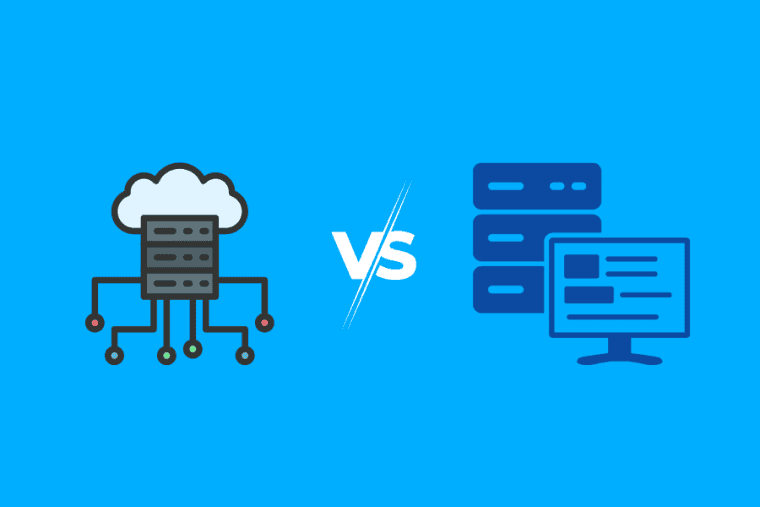


Cloud Hosting vs Server is an important comparison to make when you are looking for the right hosting solution to power your website. Your choice of hosting can directly affect the speed, performance, security, reliability and future growth of your website. Both are good performers but they work differently and are good for different types of sites.
Cloud hosting distributes resources through a network of connected servers . A dedicated server means you have one physical server all to yourself . Depending on the needs of your website, each option has its advantages.
So, Which Hosting Should You Choose? The right solution will depend on your website traffic, budget, technical needs and resource needs and plans for future growth.
What Is Cloud Hosting?
Cloud hosting is the hosting of websites and applications on a network of servers, rather than on a physical server. Financing of infrastructure can be demand based.
This makes cloud hosting very scalable. Often times when your website suddenly starts getting a spike in traffic you can just add more resources without having to migrate to new hardware altogether.
Cloud hosting is a great choice for startups, SaaS companies, e-commerce websites, and growing businesses if you need flexibility.
What Is a Dedicated Server?
Dedicated Server – A physical server that is dedicated to one customer. CPU, RAM, Storage, and Bandwidth are not shared with other sites.
This gives you a lot more control of your server environment. Select the OS, software, security and server configurations you want.
Dedicated servers are ideal for high-traffic websites, large businesses, gaming sites and applications, and organizations with special needs for performance or compliance.
Cloud Hosting vs Server: Key Differences
| Feature | Cloud Hosting | Dedicated Server |
|---|---|---|
| Resources | Distributed across cloud infrastructure | Dedicated physical resources |
| Scalability | Very high | Usually requires upgrades |
| Performance | Excellent and flexible | Consistently high |
| Reliability | High due to multiple servers | Depends on one physical server |
| Customization | High | Very high |
| Security | Strong with proper configuration | Strong with complete control |
| Maintenance | Often easier | Usually requires more management |
| Pricing | Flexible usage-based options | Fixed server cost |
| Best For | Growing and flexible businesses | Resource-intensive websites |
Performance and Resource Allocation
When you compare cloud hosting to dedicated server solutions, performance is an important factor.
A dedicated server gives you guarantyd physical resources. Resource contention is generally lower because other customers are not using that same server. That makes dedicated hosting a good fit for demanding applications.
But there is wiggle room with cloud hosting. As your needs change, adjust your resources. This is useful if traffic levels are erratic.
If you have a constant heavy resource need from your website then a dedicated server might be more stable. If you have a variable workload, cloud hosting might be a better fit.
Scalability
One of the big benefits of cloud hosting is its capacity to scale.
A startup that is growing might start with a small resource pool and grow it as traffic and customers grow. That means you don’t have to buy a bigger physical server every time your business gets bigger.
Dedicated servers are also scalable but upgrades typically require swapping hardware or moving to a more powerful server. Depending on the provider, this may require additional planning and down time.
Sites that are growing quickly often find cloud hosting the easier choice.
Security
Both hosting options can offer good security, but they do it in different ways.
You’ll have more control over security settings on a dedicated server. You can add some firewalls, monitoring tools, control of access, and security software.
Cloud hosting can be very secure if configured correctly. Most providers also offer things like firewalls, backups, monitoring, control of access, and network protection.
But hosting is not security. Updates, good passwords, malware protection, backups and good access management are still key.
Reliability and Uptime
Cloud hosting also offers good reliability as it can spread applications across several servers or other infrastructure elements. You can route workloads if one of the components has a problem depending on architecture.
The dedicated server is mainly based on one physical machine. If that server has a hardware failure, the website can be affected until the problem is resolved or backup infrastructure is activated.
For business that need redundancy and flexible infrastructure, cloud hosting can be an advantage.
Pricing and Maintenance
Another major difference is the price.
With cloud hosting, you usually pay for what you use. That makes it a good choice for startups and for sites that change a lot.
Dedicated Servers are billed on a flat monthly rate based on the hardware specification. It’s more expensive initially, but may be cheaper for sites that use a lot of resources a lot.
So does maintenance. Unmanaged servers require more administration Less technical work with cloud hosting or dedicated hosting.
Which Option Is Better for Different Businesses?
Startups
Startups often grow haphazardly. When a product launches, or a marketing campaign or social media push takes off, traffic can skyrocket.
That’s standard cloud hosting, where you can increase your resources as your business grows, without having to make major changes to your infrastructure.
Enterprise Businesses
Large companies tend to have very strict requirements regarding performance, security and compliance. A dedicated server lets you control your environment more.
However, enterprises prefer cloud infrastructure for distributed application and high availability requirements.
SaaS Companies
Growing numbers of users and customers can lead to changing workloads in SaaS applications.
Cloud hosting often works well because infrastructure can scale to meet application demand. It also offers flexible architectures for applications that need multiple services.
High-Traffic Websites
Server resources can be severely taxed by news sites, ecommerce stores, media sites and popular blogs.
A dedicated server can be a good option when traffic and resource needs are predictable. Traffic that is variable, or redundancy, might be better served by cloud hosting.
Cloud Hosting vs Server: Pros and Cons
| Hosting Type | Pros | Cons |
| Cloud Hosting | Scalable, flexible, reliable, suitable for changing traffic | Can become expensive with heavy usage |
| Dedicated Server | Powerful, private resources, highly customizable | Higher cost and greater management requirements |
How to Choose the Right Hosting Solution
So before you choose between cloud hosting and dedicated servers, ask yourself the following:
How much traffic does your website receive?
If you are experiencing a consistent high volume of traffic then a dedicated infrastructure would be the best option. Scale in the cloud is often a blessing when traffic is unpredictable.
Do you need complete server control?
If you need custom software, complex configurations or specific server settings, you may be better off with a dedicated host.
Is your budget flexible?
Cloud hosting lets you scale up your resources bit by bit. Dedicated hosting can also provide stable costs for steady workloads.
How much technical management can you handle?
Either is fine if your team has some experience with server administration. You can shift that job to managed hosting.
Will your business grow quickly?
If you plan to grow fast, cloud hosting can make it easier to scale resources.
Expert Recommendation
It’s hard to say who wins when you compare cloud hosting with dedicated servers.
If you need scalability, flexible resources, high availability and growing infrastructure as your business grows, you should go for cloud hosting.
If you need predictability of physical resources, complete control, heavy customization or high performance for resource intensive applications, then a dedicated server is the answer.
The more flexible starting point for startups and growing SaaS companies is cloud hosting. For established businesses with predictable workloads and demanding applications, Dedicated Servers can be a great value and control proposition.
The best hosting solution is the one that will work for your current workload, with the space to grow down the road.