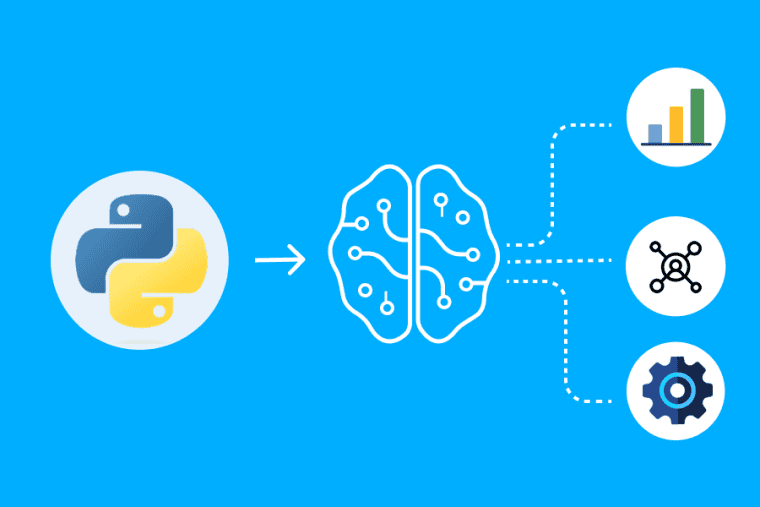


Today, AI and ML are transforming the digital world. AI is coming to our lives. Recommendation Engines Virtual Assistant”. Self-driving cars. Python is one of the programming languages that has jumped onto the visual recognition revolution. Now AI is built by developers and companies around the world using python. It is simple, flexible and has a rich library ecosystem.
Why Python Is Popular for AI
There are so many reasons why Python to learn #1 programming language for AI & ML. First you need to learn python. Developers do not have to deal with complex code structures and spend more time solving AI problems because of its simple syntax.
It’s also very big on AI. Python offers many libraries and frameworks. They allow us to analyze the data, to build neural networks and to train models. A large community of Python developers. New or pro has loads of tutorials, resources and support forums.
And python is a good team player . You can build more complex AI systems using python and other languages like C++, Java, R etc.
Python in Machine Learning
machine learning: A subset of artificial intelligence that focuses on computers learning from data, rather than being explicitly programmed. Programming for Machine Learning is mostly done in Python. Python is perfect for data processing, visualization and modeling.
Machine learning systems are given lots of data, and they look for patterns in that data, and then use those patterns to make smart predictions. This enables developers to quickly build powerful and efficient AI systems.
Machine learning algorithms help e-commerce websites to recommend the products to the customers according to their preferences. Streaming services will recommend music and movies based on what you have been listening to and watching. The majority of these smart systems are developed by developers using python programming language with the help of machine learning frameworks.
Popular Python Libraries for AI and ML
Because of its large collection of libraries and tools, Python is a well-liked language for AI. These libraries enable developers to build smarter apps easily and fast.
TensorFlow
TensorFlowTensorFlow is a Google-developed open source machine learning framework. Main application areas are deep learning and neural networks .
TensorFlow now lets developers build AI models for image classification, natural language processing and speech recognition. “Very good.” Commonly adopted in commercial AI Commonly adopted in research Scaling
Today Tensorflow models are used in virtual assistants, smart recommendation systems and other AI apps.
PyTorch
The most popular framework for AI research and development. We like Meta’s PyTorch, because it gives a nice tradeoff between ease-of-use and flexibility. Researchers like that PyTorch is fast for doing model development on the fly and it’s more fun to monkey around with . This is very common for deep learning, Computer Vision and robotics projects.
PyTorch is the most popular choice in AI research labs and universities to build experimental AI systems and state-of-the-art neural network models.
Scikit-learn
Scikit-learn is a free software machine learning library for the Python. under a BSD-style 3-clause license. It provides you the tools for classification, regression and clustering. And for preprocessing data.
If you’re a developer and want to build machine learning applications with less code, then scikit-learn is the right option. It is used in business analytics , fraud detection and predicting customer behaviour .
NumPy and Pandas
Good AI needs a lot of data. The most useful libraries in Python for structured and numerical data are Numpy and Pandas.
Developers use libraries to : Clean data Data Organization Data Analysis Train ML models One of the most important steps in AI development is data preparation.
Real-World Applications of Python in AI
Many of the AI apps people use on a daily basis are powered by Python
Chatbots and Virtual Assistants
This flexibility makes it suitable for many industries.
The new breed of chatbots and virtual assistants that understand and speak the human language are also using Python AI frameworks. Natural language processing and machine learning power popular applications like voice assistants and customer support bots.
Python Libraries These systems are capable of understanding speech and parsing the user input with accurate real-time answer.
Recommendation Systems
Recommendation engines are the engines of personalization that power everything from streaming services to shopping sites to social apps. These systems follow our clicks and what we watch and buy (or don’t buy) to learn what we like and then show us movies, products and posts we might like. That’s the type of machine learning model that’s used to provide you those personalized recommendations that Netflix and Amazon do. Python is a good language to work with large data sets and fast development of recommendation models. Developed recommendation engines with python
Image Recognition Software
An image recognition system is one of the most important AI applications. Python frameworks are employed for training deep learning models to detect objects, faces, and patterns on images.
Social media companies use image recognition for automatic tagging, healthcare companies use the technology to identify diseases in medical scans. Self-driving cars rely on image recognition systems to identify people, roads and traffic signs.
Popular frameworks such as TensorFlow and PyTorch are used to develop computer vision applications.
Fraud Detection
Banks and other financial institutions use AI systems to detect suspicious transactions and prevent frauds. Training machine learning models to detect abnormal behaviors and transaction patterns is easy with python.
These smart systems help to increase security and decrease financial losses to companies from fraud.
Benefits of Using Python for AI
Why Use Python for AI & ML Projects? Advantages of Using Python for AI & Machine Learning Projects
- Basic Syntax – Noobs vs Gurus
- All-in-One Data Storage for AI & ML
- Extra Help Community
- Suitable Systems
- less development cycles
- Cloud Computing & Big Data Platforms Integration
These are some of the major benefits that make Python the number one language in AI and still the most preferred language among developers across the globe.
The Future of Python in AI
The future of AI is arriving and python will play a big role in this growth. With many companies investing on automation, robotics, data science and smart applications, it is expected to drive the demand for Python Developers.
All these cutting-edge technologies – generative AI, autonomous systems, smart healthcare – rely on machine learning frameworks based on Python.
Conclusion
Python is not static, there is a big open source community behind it. It’s one of the most powerful weapons in our arsenal to build the next generation of AI apps,” he said.Most of the AI and machine learning these days is done in Python. It’s readable, it has a huge community, it has tons of libraries. It’s so easy developers can focus on problem solving, not wrangling with convoluted code. Python is a very powerful language and can be used to build chatbots, recommendation engines, image recognition, fraud detection and just about anything that can learn from data. Tensorflow, Pytorch and Scikit-learn are tools to prototype, train and deploy models quickly AI is evolving and the simplicity and power of Python will be a key asset for companies and developers building intelligent solutions.