


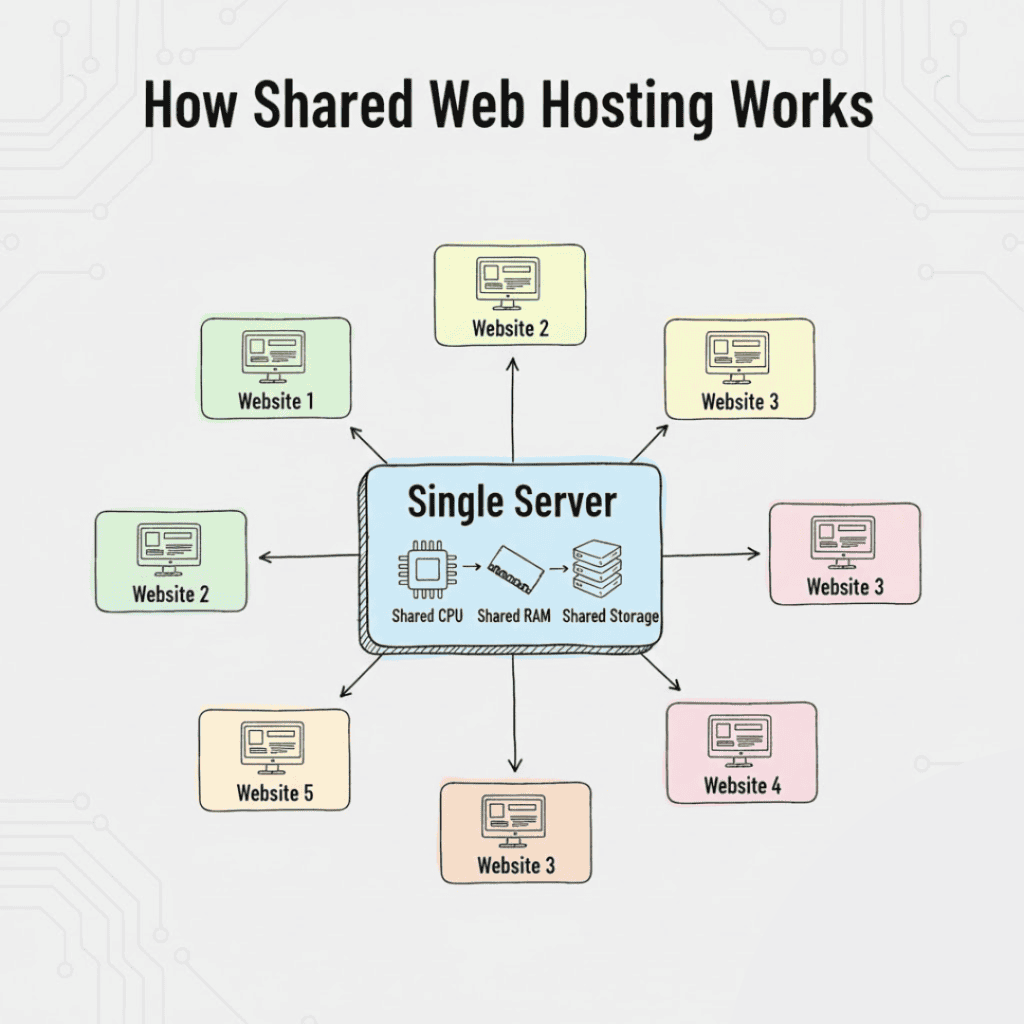
Shared hosting’s the cheapest way into web hosting, and the reason’s simple — a bunch of websites split the same server, same CPU, same RAM, same disk space. What you get for that low price is usually a control panel (cPanel), one-click WordPress installs, email, and basic SSL. Honestly, that’s all a small site actually needs to get online fast and cheap.
Why Shared Hosting’s Worth Considering
It’s genuinely cheap. Shared plans are about as low-cost as web hosting gets, which makes them a solid fit for personal blogs, portfolios, or a new small business site just getting started. Plans usually range from budget-tier pricing up to something a bit more reasonable, depending on what you need.
It’s simple. Providers bundle in cPanel, auto-installers, and managed updates specifically so people who aren’t technical can get a site running without much of a learning curve.
Someone else handles the infrastructure. Server OS, basic security patches, hardware — all the host’s problem, not yours. You just worry about the actual content.
You usually get free extras thrown in. Free SSL, backups, migrations — a lot of providers include these just to get you to sign up in the first place.
Where It Falls Short
Resources are shared, which means performance isn’t always consistent — if some other site on your server suddenly spikes in traffic, yours can slow down right along with it, through no fault of your own.
You also don’t get much control. No root access, limited server tuning, and PHP or customization settings can feel restrictive at times.
There’s a scaling ceiling too. Run an eCommerce store or a media-heavy site that keeps growing, and you’ll likely outgrow shared hosting eventually, needing to move up to VPS or cloud hosting.
And renewal pricing’s worth watching. That low intro price is real, but renewals and optional add-ons can push your actual total cost up over time.
Who Actually Should Use Shared Hosting
Makes the most sense for hobby sites and personal blogs, small local businesses without a huge customer base, students and portfolios, or microsites just demonstrating something. Basically, anyone who values ease and low upfront cost more than squeezing out maximum performance.
Cyberin’s Shared Plans vs. the Competition
Cyberin
Cyberin is an India-focused cPanel hosting company, with shared plans starting genuinely low — around ₹145/month, based on their current pricing pages. Free migrations, a 30-day money-back guarantee, and servers actually located in India round things out. NVMe storage and WordPress-friendly features are a big part of the pitch.
Hostinger
Hostinger comes in with very low entry prices in India — single plans around ₹69/month during sales — plus a global CDN, weekly backups, and their own polished control panel, hPanel. Known for a strong price-to-feature ratio, especially if you’re willing to commit to a longer term upfront.
Bluehost
Bluehost gets recommended a lot for WordPress beginners, mostly because of how well it integrates with WordPress.org. Their shared plans lean more toward reliability and a smooth WordPress start than chasing the lowest price. New users often get a free domain and some useful built-in tools too.
GoDaddy
GoDaddy sells convenience and brand recognition more than anything else in India. Plans typically bundle free SSL, email, and marketing tools, often on sale — though renewals tend to cost more. They generally promise 99.9% uptime and lean on easy site-building tools as a selling point.
Zordo MarketPlace
Zordo MarketPlace is built around giving Indian users flexible hosting that genuinely covers the basics and then some. Starting out, selling products, or running something already growing — there’s usually a plan built around that specific goal.
It pairs secure hosting with management tools that don’t require much of a learning curve, plus built-in features aimed at making online selling straightforward. The focus is on reliable performance, tools that scale with your business, and controls that don’t turn managing your site into a chore. With pricing that’s fair and services built for business use, it’s a reasonable pick if you want to launch and grow a digital platform without a ton of friction.
The Quick Version
Hostinger has the lowest advertised entry prices — best if budget’s your top concern. Cyberin’s a strong pick for cPanel hosting with genuine India-based servers and support. Bluehost edges out for WordPress beginners specifically. GoDaddy wins on domain-and-hosting convenience if that’s what you’re after.
Getting More Out of Shared Hosting
A few things that genuinely help:
- Go light on your theme, and optimize your images (WebP, lazy loading) so pages aren’t dragging under their own weight
- Turn on caching — page cache, browser cache — and lean on a CDN for static files where you can
- Keep plugins and third-party scripts to a minimum; every one you add tends to introduce a little more latency
- Run PHP 8.x if you can — genuinely faster and lighter on memory than older versions
- For big media files, object storage or a media CDN keeps you from hammering your disk I/O limits
What to Actually Compare Before Buying
A few things worth checking carefully, not just glancing at:
- How close is the server or data center to your actual audience? Closer generally means lower latency.
- What are the real CPU, memory, and inode limits — not just a vague “unmetered bandwidth” claim?
- Is storage NVMe/SSD (noticeably faster) or still HDD?
- How often are backups taken, and how easy is it to actually restore one?
- How responsive is support, really — 24/7 chat with India-based hours is genuinely useful if something breaks at an odd hour.
- What’s the total cost over one to three years, factoring in renewal pricing, not just the intro rate?
- Is there a real uptime SLA and a money-back guarantee — ideally 30 days — to lower your risk if it doesn’t work out?
Conclusion
Shared hosting’s a cheap, approachable way for beginners to get a website live — genuinely solid for blogs, small businesses, and low-traffic sites. Curious how it stacks up against VPS, cloud, and dedicated hosting? Worth a look before you commit either way.
Cyberin brings India-based servers and NVMe storage to the table; Hostinger, Bluehost, and GoDaddy are all reasonable alternatives depending on what you’re actually optimizing for. Pick the right plan, put in a little effort optimizing performance, and shared hosting’s a genuinely solid first step before you eventually move up to VPS or cloud hosting.