


Building a business is all about building everything from the ground up – your product, your brand, your web presence. One of the most important technical decisions early founders make is choosing a web host. Your hosting plan can affect your site speed, security and scalability, as well as your site’s ability to handle sudden growth. The startup knows what it’s supposed to do. Choose a hosting plan that’s inexpensive now, but can scale with you later.
This guide helps you decide on the right web hosting plan for your startup from the very beginning. Mostly it deals with traffic, scaling and upgrading and how to choose the best web hosting provider in India
1. Why Hosting is Important for New Businesses
In the early days, every second counts, whether you’re pitching potential customers, onboarding early users, or testing an idea. A slow or broken website costs you trust, sales and potential investors.
Hosting that is good for startups should offer:
- Fast loading times
- Long uptimes
- “It scales.”
- Fair Pricing
- Super secure.
A good hosting plan is the foundation of your tech growth and you will save yourself a lot of money on costly migrations in the future.
2. Begin with Small Goals but Think Big
Most new businesses begin with few customers, little traffic and small budgets. So it’s smart to start out with a modest plan, but not one that limits your growth.
The Best Plans for Startups in Their Early Stages
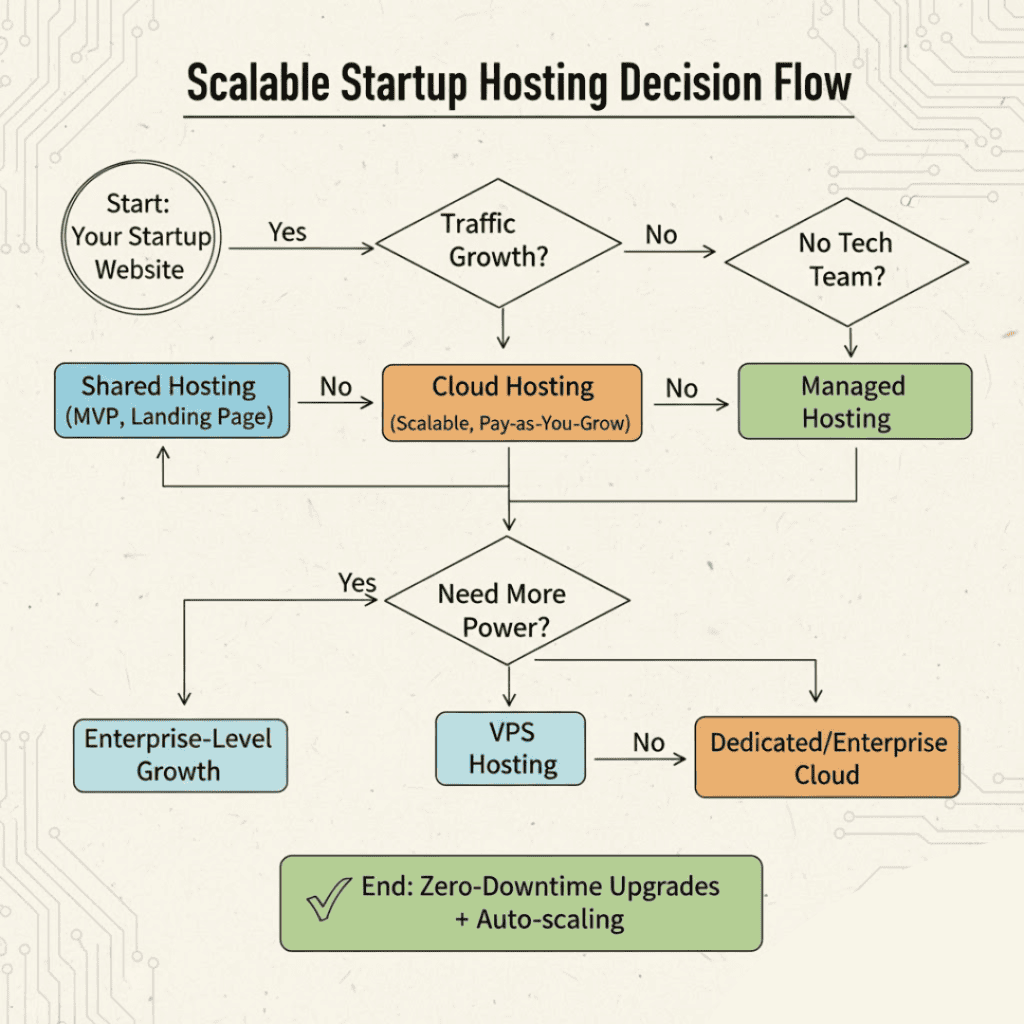
Shared Hosting is perfect for MVPs, landing pages and new sites. Fairly economical, but not very powerful.
Cloud VPS hosting is a good choice for startups that want to expand in the long run. It is scalable with pay as you grow pricing model and can grow with your needs.
If your team isn’t very technical then managed hosting can be a good option as the hosting company will handle backups, updates and security.
Choose a hosting provider that lets you easily upgrade to higher plans as your startup grows.
3. Pick Infrastructure That Can Grow With You
Scalability is one of the biggest things for startup hosting. Your hosting needs to be able to handle traffic spikes without slowing down or crashing when marketing campaigns, product launches or investor demos drive more visitors to your site.
Look for These Features That Make It Scalable
- Elastic resources: You can add RAM, CPU and storage as you need them.
- Vertical Scalability The ability to scale up from shared to cloud to vps to dedicated
- Auto-Scaling Cloud Hosting It increases resources automatically when the traffic is heavy.
- Load balancing : Spreads traffic among several servers to maintain steady performance.
Choose a hosting solution that will grow with you so you won’t have to move later.
4. Know About Traffic Spikes and Seasonal Changes
Lots of startups have crazy traffic swings. Visits can increase overnight, for example, due to viral marketing, product launch days, funding announcements or media coverage.
Your hosting should:
- Handle unexpected traffic spikes
- Ensure your website is mobile-optimized during peak hours.
- And it’s not like there’s a lot of information out there to go on.
- LiteSpeed Cache or Redis* type cache systems CDN integration support (Cloudflare, Akamai etc.)
If one spike can take your website offline then you are not on a good hosting plan.
5. Security Should Never Be an Option
Startups are less protected and hackers find them a more attractive target. One breach can ruin your reputation, clients’ trust and sales.
Security Features You Can’t Live Without
- Free SSL Certificate
- Malware protection and scanning
- DDoS protection
- Scheduled Automatic Backups
- Two-factor authentication (2FA)
- Web Application Firewall(WAF)
Safe startup web hosting means your platform is secure and dependable from the first day.
6. Performance Is Important: Speed = Sales
If your site takes longer than 3 seconds to load, people will leave. New businesses are in a race against time.
In performance judging look for:
- Storage (SSD/NVMe)
- CDN support
- Optimized servers such as LiteSpeed, Nginx
- High availability guarantee (99.9% or higher)
- Good cache
Better Hosting = Better SEO = More Time Visitors Spend On Your Website = More Conversions
7. Paths to Upgrade Without Downtime
Your startup is exploding and your hosting needs to be able to scale up easily to meet the growth, without any downtime. A down website is bad for sales, bad for search engine optimization, bad for user happiness.
Best Ways to Upgrade
- Shared → Cloud
- Cloud → VPS
- VPS → Dedicated or Enterprise Cloud
Choose a host that lets you change servers with no downtime. This way your site stays up as you switch servers.
8. Affordable Hosting for New Businesses
Money matters, especially in the beginning. Cheap hosting that slows your site down could cost you more in the long run.
Check for:
- Transparent pricing (no extra renewal fees)
- Free Email Free Migration Free SSL Certificate
- cloud hosting plans pay as you go
- Cost-effectiveness of plans over the long term
Value for money at time of purchase does not mean cheap goods but cost effective
Conclusion
Picking the right startup web hosting from the very beginning will save you time, money and effort. Select a hosting plan that is secure, fast, affordable and above all scalable. If you are running an MVP, SaaS platform or eCommerce startup, the right hosting will allow you to grow your business without borders.
The right host gets your startup ready for traffic, growth and new opportunities from day one.