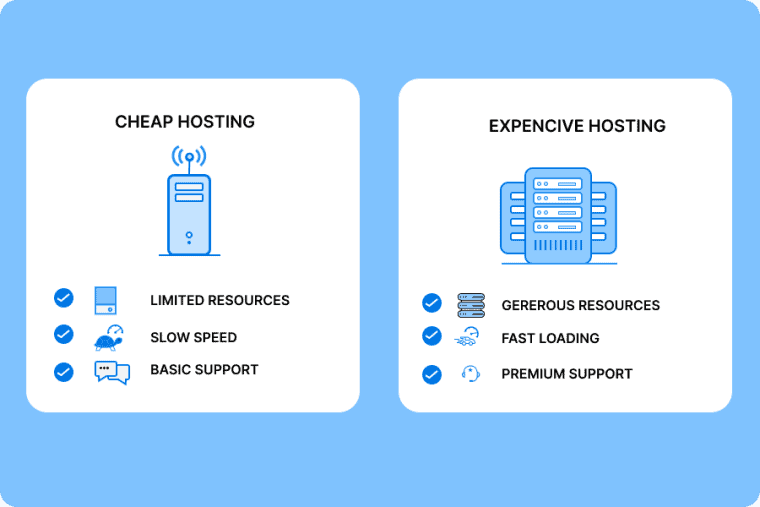


Choosing the right web hosting plan is one of the most important decisions for anyone building a website—from hobby bloggers to small business owners. While many people are naturally drawn to cheap web hosting, thinking it will save money, others believe expensive hosting is always better. So, which one should you choose? In this article, we’ll compare cheap and premium hosting across key aspects such as price, performance, scalability, and support — and help you decide what fits your needs best.
What Is Cheap Web Hosting?
Cheap web hosting means hosting plans that cost very little, usually less than $5 a month. Most of the time, these plans only have basic features like shared servers, limited storage, low bandwidth, and simple control panels. People like them mostly because they are cheap. This makes them popular with new users and small websites.
You should know where cheap hosting works well and where it doesn’t before you make a choice, though. “Cheap” doesn’t always mean “bad.”
Price: How Much Should You Pay?
One of the most obvious differences between cheap web hosting and premium hosting is the price.
- Cheap Hosting: Prices are very low (sometimes less than ₹200–₹300/month). It’s good for personal blogs and people who are new to the internet.
- High-Cost Hosting: Premium plans can cost between ₹1,000 and ₹5,000 or more a month, depending on things like dedicated resources, managed services, and better security.
Keep in mind that a service that is cheap doesn’t mean it’s what your website needs. Cheap hosting can help you save money if your website doesn’t get a lot of traffic or need a lot of resources. But if your audience grows, you might quickly reach limits that make things slower or even cause them to stop working.
Performance: Speed and Reliability
Performance is where the difference between cheap and expensive hosting becomes noticeable.
Cheap Web Hosting Performance
Most of the time, cheap plans put your site on a shared server with a lot of other sites. This has effects:
- Longer loading times when there is a lot of traffic.
- Limited server resources: CPU and RAM are shared, so if other sites use a lot of them, it can slow down your site.
- Basic uptime guarantees, which are usually around 99% or a little less, mean that there may be times when the service is down.
This level of performance might be fine for hobby blogs, portfolio sites, or small informational sites, but it might not be good enough for projects that are very important to the business or that get a lot of traffic.
Expensive Hosting Performance
These are some of the benefits of premium hosting, like VPS (Virtual Private Server), managed WordPress hosting, or dedicated servers:
- Loading times are shorter
- More guarantees of uptime
- Resources that are dedicated or optimized
This means better performance, especially for larger sites like e-commerce stores, membership sites, or sites that are getting more visitors.
Scalability: Growing With Your Site
Another major difference between cheap and expensive hosting is scalability—your ability to grow without friction.
Limitations of Cheap Hosting
Cheap hosting plans often have:
- Caps on storage and bandwidth
- No room for sudden traffic spikes
- No powerful upgrade pathways
If your site starts getting more visitors, you might experience slowdowns or forced upgrades. You may also need to migrate manually to a better server, which can be complex for beginners.
Premium Hosting Scalability
High-end or expensive hosting plans are easy to scale:
- Upgrading is easy (CPU, RAM, storage)
- Elastic scaling for when traffic spikes
- Support for seamless migration
Scalability is important for businesses or sites that are growing or expecting more traffic. If you spend a little more on hosting early on, you can save time, money, and stress later.
Support: Help When You Need It
Customer support is another critical factor where cheap and premium hosting diverge.
Support With Cheap Web Hosting
Affordable hosts usually offer:
- Email-based support
- Limited response hours
- Slower ticket resolution
If your site runs into technical problems, you might wait longer for answers or get only basic help.
Premium Support Experience
With expensive hosting, you often get:
- 24/7 live chat or phone support
- Dedicated technical teams
- Faster troubleshooting
For businesses or people who rely on their website for revenue, having reliable support can be worth the extra cost.
Real Risks of Extremely Low-Cost Hosting
Cheap web hosting may seem like a good idea, but there are real risks to going with the lowest price:
- Slow Performance: If your website is on a shared server with too many accounts, it could slow down, which is bad for both users and SEO.
- Limited Resources: If your computer doesn’t have enough memory or storage, upgrades, plugins, or media content might not work well.
- Problems with downtime: Some hosts may promise uptime but not always be available.
- Weak Security: The cheapest plans usually don’t have advanced security features like backups, firewalls, and malware scanning.
- Bad Support: If you have limited or slow support, you could be stuck when you have technical problems.
These mistakes can hurt your brand’s reputation, user satisfaction, and even your search engine rankings.
When Cheap Hosting Is a Good Choice
When is cheap web hosting a good idea?
- You’re making a personal blog or portfolio.
- The site has a lot of information but not a lot of visitors.
- You’re trying out ideas before growing them.
- Right now, the most important thing is the budget.
In these cases, cheap hosting is a low-risk, low-cost way to get your site online quickly.
When You Should Upgrade
If you want to, you might want to upgrade to premium hosting.
- Your website gets more visitors all the time.
- You have a business, membership, or e-commerce site
- It’s very important that the page loads quickly and is reliable.
- You need more professional help and better security.
Upgrading makes sure your site runs well, can handle more traffic, and stays safe, which can help you gain credibility and trust from customers.
Conclusion
Cheap web hosting is a good choice for beginners and small websites, but it has some drawbacks when it comes to performance, scalability, and support. If your website gets bigger or is important to your business, premium hosting is often worth it for the peace of mind and reliability it provides.
In the end, you should choose what is best for your website’s goals and future growth while also keeping costs in mind. Keep in mind that cheap hosting will get your site online, but the right hosting will help it grow, work well, and do well.
If you’re not sure where to start, look for a hosting provider that is both cheap and reliable. This way, you won’t have to choose between quality and cost.