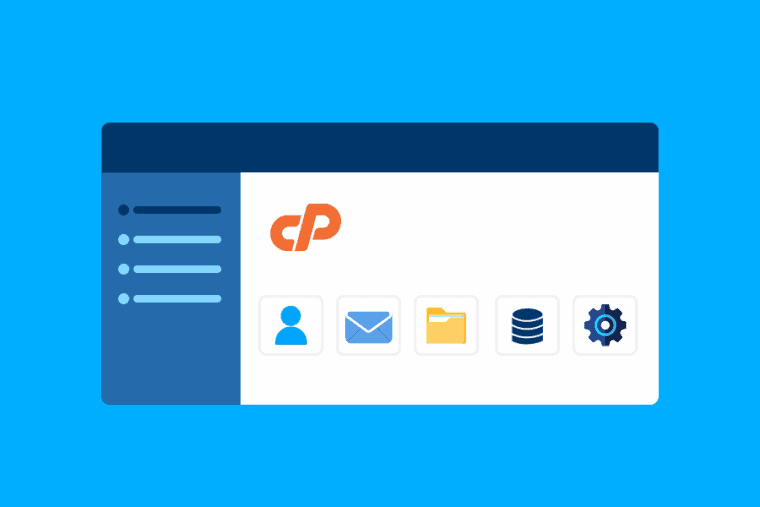


If you are new to web hosting, the management of a website may seem confusing. cPanel Hosting offers an easy, graphical control panel that simplifies many common hosting tasks. Control your website, domains, emails, databases, files and security, all from one place. Forget complicated server commands.
In this guide, we will tell you what is cPanel, how it works, its main features and how beginners can use it.
What Is cPanel Hosting?
cPanel is a web-based control panel that lets you manage your hosting accounts and websites.
It has a dashboard too, that allows you to perform common hosting tasks, without having to know everything about servers.
Upload your website files, create email accounts, manage your domains, install SSL certificates, create databases, manage backups and monitor your hosting account with cPanel.
Most hosting providers include access to cPanel as part of your hosting plan. It should be there for you to open from your hosting account or a cPanel login URL your hosting company provides.
How Does cPanel Hosting Work?
cPanel is an interface between you and the hosting server. When you click on a choice from the dashboard, cPanel sends the proper instructions to the server in the background.
For example, when you make an email account you don’t have to set up the mail server yourself. You just put the email address and password in cPanel.
Same thing goes for databases, domains, files, SSL certificates and many other hosting features.
Key Features of cPanel Hosting
cPanel includes several tools that help you manage different parts of your website.
1. File Manager
File Manager – With File Manager you can view and edit your website files directly in your browser. Upload, download, rename, move, edit and delete files without FTP software.
Most sites will have their main files in a directory named public_html.
2. Domain Management
Control domains and subdomains with cPanel Depending on your hosting plan you can add more domains, create subdomains and domain settings.
For example, you could create a subdomain such as blog.example.com for your blog.
3. Email Accounts
Create an Email Address in cPanel with Your Domain Name You can set up addresses like [email protected] or [email protected] .
Can also handle email passwords, forwarding, auto responders and spam settings.
4. MySQL Databases
Many sites (like WordPress sites) use databases to store settings and content. cPanel can create MySQL databases and database users.
You can also access and manage your database tables with phpMyAdmin from cPanel.
5. SSL Certificates
SSL certificates protect the data between your site and the visitors to your site. This is where SSL comes in and your website can start to run on HTTPS.
Most hosting providers will provide free SSL certificates that you can install or manage in cPanel.
6. Backups
Backup tools copy the important files and databases on your site. Things can go wrong but you can restore your site from a backup.
Of course, any time you make any major changes to your site, it’s always a good idea to make a new backup.
7. Cron Jobs
You can schedule automatic tasks to perform on your hosting account with Cron Jobs. For example, you can make a web program that runs at a certain time of day.
Great for automated backups and maintenance scripts and scheduled application jobs.
8. Security Settings
cPanel also comes with a variety of tools related to security. Password protection, blocking by IP, SSL, hotlinking and other security controls could have been in place by your host.
The specific options are dependent on the hosting provider.
How to Upload a Website Using cPanel Hosting
Uploading files is one of the first tasks beginners usually perform.
- Log in to your cPanel account.
- Open File Manager.
- Go to the
public_htmldirectory. - Click Upload.
- Select your website files or a ZIP archive.
- Wait for the upload to finish.
- If you uploaded a ZIP file, extract it.
- Open your website domain to check the result.
Make sure your main website file, such as index.php or index.html, is placed in the correct directory.
Common cPanel Hosting Problems and Troubleshooting
Sometimes, beginners may have simple problems managing their hosting account.
Website Error Check your files, php version, Database connection, Recent changes.
SSL not working: Ensure your certificate is installed properly and your domain is pointing to the correct hosting server.
Not Getting Email? Verify MX records, mailbox settings, storage limits and DNS configuration.
Database Error in : There is a database error showing on your website. Please check the database name, username, password and database host in your website configuration.
If the problem continues, you can usually receive help from your hosting provider’s support team to spot any issues on the server end.
Is cPanel Good for Beginners?
“Yeah. cPanel is meant to make many of the common hosting management tasks easy to do, without needing to be an expert in the technology.
You don’t have to know every command on the server to use it. Start with the basics: File Manager, Email Accounts, Domains, SSL and Backups. Once you get more confident you can start to look into more advanced features like Cron Jobs and database management.
Frequently Asked Questions
Is cPanel free?
cPanel is commercial licensed software that is sold by hosting companies. It is contingent upon your hosting plan whether it costs you anything.
Can I manage WordPress with cPanel?
Yes. cPanel allows you to manage WordPress files, database, SSL, backups, domain and email settings.
Do I need coding knowledge to use cPanel?
Nope. Most simple tasks in cPanel can be done from its graphical interface. Some advanced tasks may require technical know how.
What is the difference between cPanel and web hosting?
Web hosting is the server space on which your website resides. cPanel is a control panel that enables you to manage those hosting resources.
Conclusion
cPanel is one dashboard that puts a lot of tools for your website in your hands. It makes it easy to do everyday hosting tasks like uploading files, creating email accounts, and managing databases, SSL certificates, backups and security settings.
If this is your first website, then the basic cPanel tools can help you save time and make managing your hosting easier. Once you understand how the dashboard works, you can do many routine website things with confidence, without resorting to the technical commands.