


Finding hosting that’s fast, affordable, and reliable is harder than it sounds — especially once you factor in that your visitors are mostly in India. Hosting companies mix and match performance, pricing, infrastructure, support, and features in different ways, so the only real way to figure out what fits your site is to compare them side by side rather than go by name recognition alone.
Hostinger is a name most people have heard of — a widely used global provider. Cyberin is one of several options built with Indian websites specifically in mind. This isn’t really about crowning a winner; it’s about walking through the factors that actually matter — performance, pricing, ease of use, support, and security — so you can make the call for your own site.
Why “Local” Sometimes Makes Sense for Indian Sites
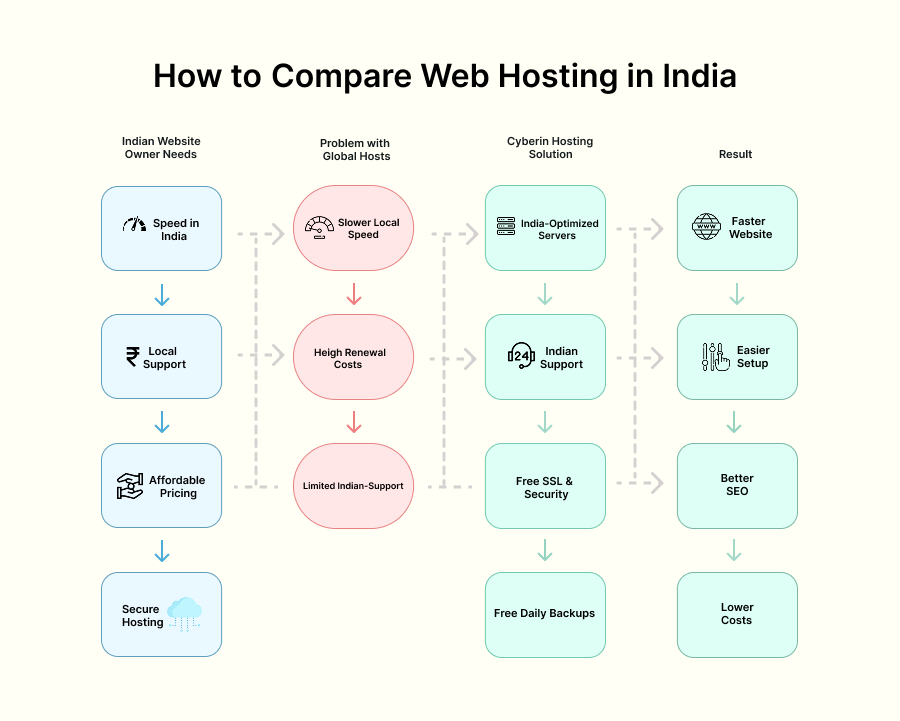
Before comparing any two providers, it’s worth understanding what tends to matter most when your audience is primarily in India:
- Where the servers actually are, and how that affects connection speed
- Whether support hours line up with your own time zone
- How pricing and renewals work, and in what currency
- Which payment methods are actually available to you
- What resources come included at each tier
- What uptime and performance numbers are being promised
Server location genuinely affects latency, and payment/pricing structure affects how smooth the whole experience feels day to day. Worth keeping both in mind alongside the more obvious technical specs.
So, Who’s Cyberin?
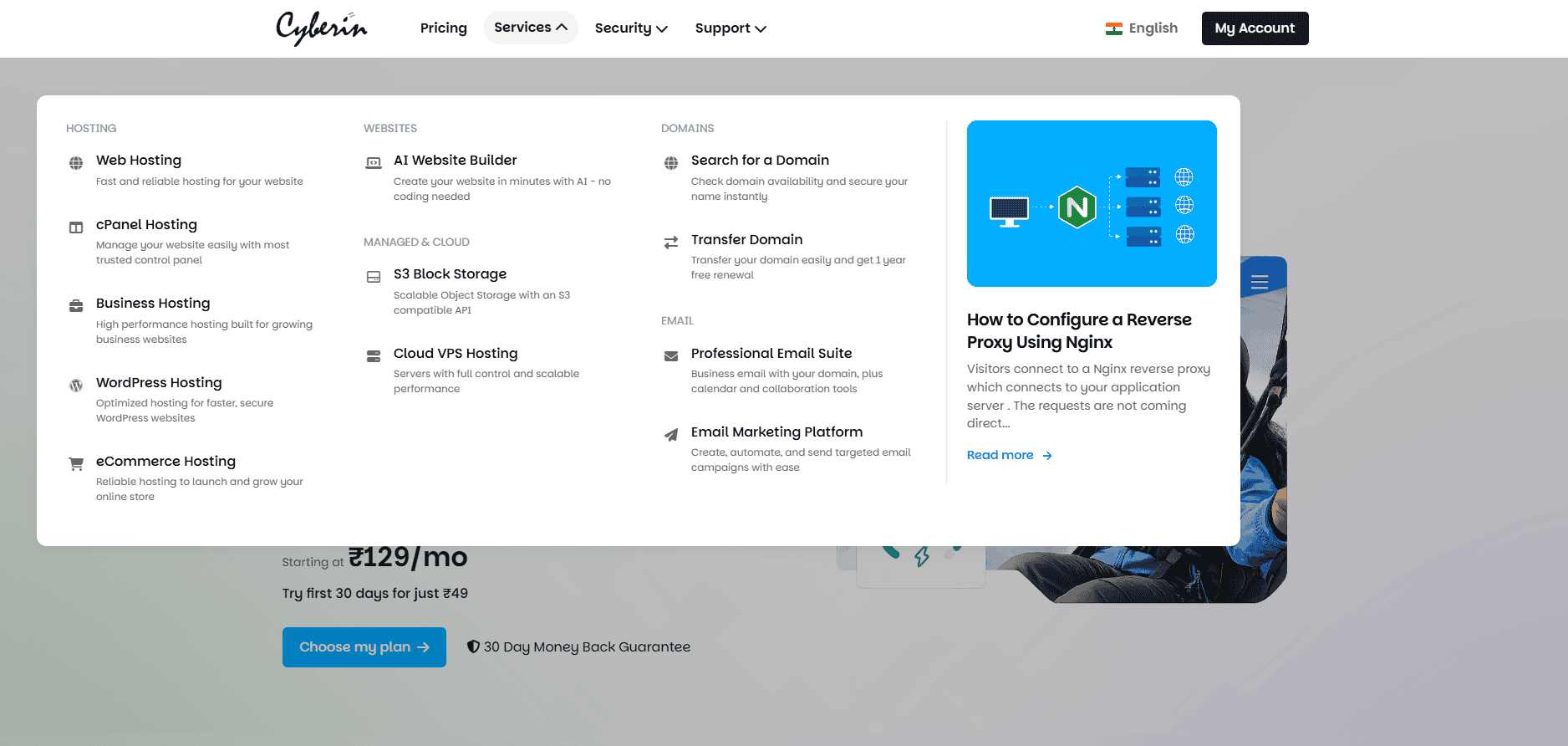
Cyberin is an India-based provider offering web hosting in India across shared hosting, WordPress hosting, cPanel hosting, VPS hosting, and other options depending on your needs.
For anyone running a site aimed at Indian visitors, the things worth checking are server location, which support channels are actually available, pricing, payment options, and what’s included at your plan level. Rather than assuming any one provider is the right fit for everyone, it makes more sense to compare Cyberin against other hosts based on what your specific site actually needs.
Speed and Performance
Site speed affects more than just user experience — it shapes conversions and how long people actually stick around. Hosting infrastructure is one piece of that puzzle, alongside your code, your images, caching, CDNs, and general server configuration.
When you’re sizing up Cyberin’s performance, a few things are worth a closer look:
- The type of storage the plan uses
- Available CPU and RAM
- Where the servers/data centers are physically located
- What caching and optimization tools are included
- Network performance and uptime numbers
- Resource limits tied to your specific plan
Cyberin advertises SSD/NVMe storage and a 99.9% uptime target on its applicable plans — worth lining up against whatever Hostinger offers at the equivalent tier.
Here’s the honest part: it’s genuinely hard to say one host is “faster” than another without actually testing it. A fair comparison means hosting similar sites with similar configurations and checking real numbers with something like PageSpeed Insights or GTmetrix — not just trusting whichever provider’s marketing page sounds more confident.
Pricing: What You’re Actually Paying For
Hosting prices swing a lot depending on the plan, billing cycle, included resources, and — this is the one people forget to check — renewal rates.
When you’re comparing Cyberin and Hostinger, look past the intro price to:
- Storage type and how much you get
- CPU and RAM
- How many websites the plan allows
- Whether SSL and backups are included
- Email and database limits
- Domain-related costs
- Both the introductory and renewal pricing
- Any resource or usage caps
Cyberin has a spread of plans with different resource allocations, and whether one of them beats a comparable Hostinger plan on value really comes down to current pricing and what your specific site actually needs. The only way to get an accurate read on total cost is to check the current plan details and renewal prices before you commit — not the launch-day promo price.
Getting Started: How Easy Is It Really?
How painless your hosting account is to manage comes down to the control panel, the installation tools on offer, and how good the documentation is.
Worth comparing:
- Whether there’s a proper control panel for files, databases, email, and domains
- One-click installers for the apps you’ll actually use
- Documentation and setup guides that don’t assume you’re already an expert
- Tools for managing your website and domain in one place
Most modern hosts — Hostinger included — have put real effort into onboarding, so this often comes down to personal preference on interface rather than one provider being objectively easier. Worth choosing a control panel you’ll actually feel comfortable navigating day to day.
Customer Support
Support matters most exactly when you don’t want it to — during downtime, a broken configuration, or a messy migration.
Cyberin offers support through chat and tickets depending on the plan; Hostinger has its own set of channels too. Rather than guessing which one has “better” support, it’s worth comparing:
- What support channels are actually available
- Support hours
- How fast responses tend to be
- How technically knowledgeable the support team is
- Whether documentation fills in the gaps
- Whether support is even included at your plan tier
Testing the support experience yourself — a real question sent to pre-sales — tells you more than any advertised claim will.
Security
Security features vary between providers, and sometimes between plans from the same provider. When comparing Cyberin and Hostinger, check exactly what’s bundled with the specific plan you’re eyeing.
Worth confirming:
- SSL certificates
- Malware scanning or detection
- Firewall protection
- Automated backups
- Account isolation
- Security monitoring
- Backup retention and restoration options
Don’t assume a feature is included just because it sounds standard — check the current plan documentation to confirm what’s actually there, what its limits are, and whether it costs extra.
Conclusion
Hostinger and Cyberin are simply different options, and which one fits better depends on what your specific website needs — not on some general ranking that’s supposed to apply to everyone.
When you’re weighing the two, look at server location, storage technology, CPU/RAM, pricing and renewal rates, the control panel, support availability, security features, backups, and resource limits. Performance also shifts depending on the site itself, so the most useful comparison is testing similar configurations with the same type of site and tracking load time, uptime, and resource usage yourself.
At the end of the day, checking current plan details and actually testing both against your own requirements will tell you more than any single article — including this one.