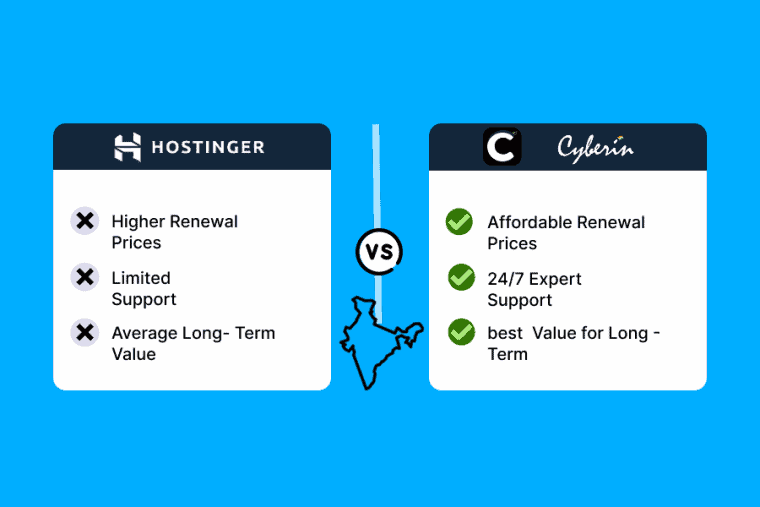


Been using Hostinger as a hosting company in India for a while. You’ve probably noticed the intro pricing is genuinely low. But once that first term wraps up, a fair number of users end up facing higher renewal costs and add-on charges for stuff like backups, SSL, or email — things that weren’t obvious at signup. A hosting plan that felt cheap at first can turn into a bigger ongoing cost than expected.
That’s part of why some Indian bloggers and small businesses look around for alternatives. Cyberin is one alternative Indian users may consider. Here’s a look at how the two providers differ in pricing, infrastructure, features, and support.
What Some Indian Users Find Frustrating About Hostinger
Hostinger’s a big, globally recognized name — that’s not in dispute. But a few things come up often enough to be worth knowing:
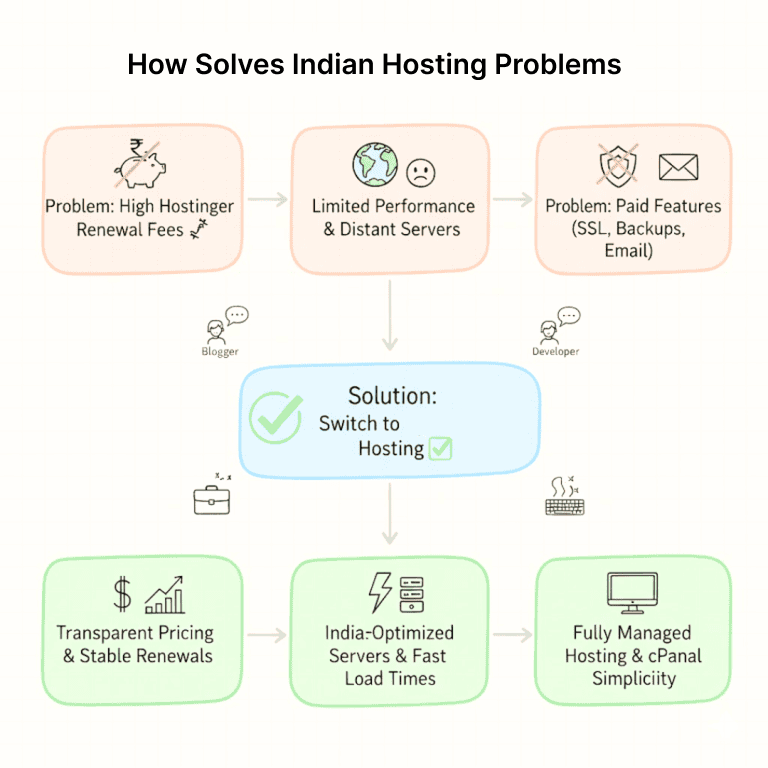
- Renewal fees that jump noticeably after the first term
- Fairly minimal support depth on entry-level plans
- Extra charges for things like backups, email, and SSL that some assume are included
- Server locations that may add latency for India-based visitors, depending on which data center you’re actually assigned
- Performance that can dip during high-traffic periods
None of this makes Hostinger a bad host — plenty of people use it successfully. These are just the friction points that sometimes push people to compare alternatives.
What to Actually Look For in an Alternative
If you’re considering switching, here’s what’s worth checking for, regardless of which provider you land on:
- Clear pricing that doesn’t swing wildly at renewal
- Servers actually optimized for Indian traffic
- Support that works for people newer to hosting
- Baseline features (SSL, backups, security) included, not upsold later
- A control panel you’re comfortable with — cPanel, for most people
Where Cyberin Differs on Pricing
One difference to examine is how each provider structures introductory and renewal pricing.
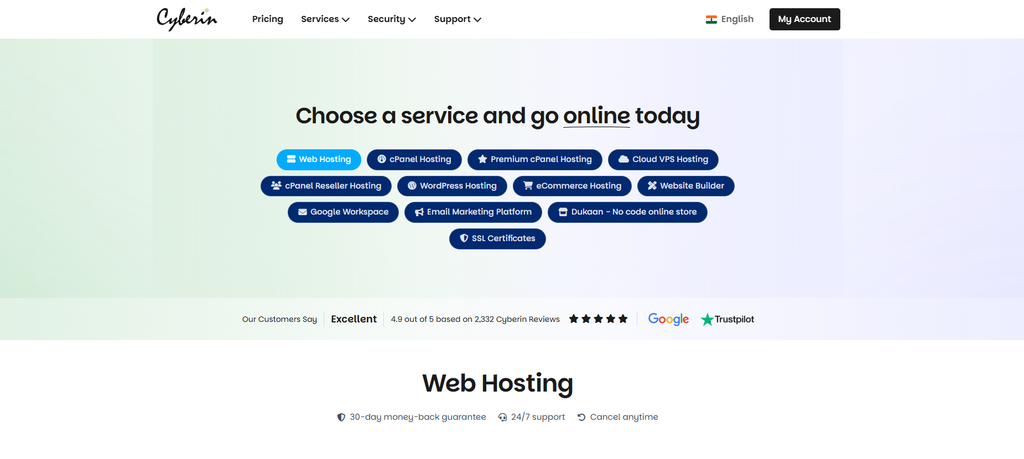
- Pricing is presented plainly, without hidden extras
- Renewal rates tend to stay close to what you signed up for — worth verifying current terms on the pricing page
- No requirement to commit to a long-term plan just to see a reasonable rate
This predictability is genuinely useful for bloggers and small businesses who’d rather budget confidently than get surprised later.
Servers Aimed at Indian Traffic
Cyberin’s infrastructure is built specifically around Indian users, which can mean:
- Faster loading for Indian visitors specifically
- Some SEO benefit tied to page speed, since that’s a known ranking factor
- More consistent performance during traffic spikes
Whether this is a meaningfully bigger advantage than Hostinger’s own infrastructure depends on which specific Hostinger plan and data center you’re comparing against — worth checking directly rather than assuming.
Fully Managed Hosting, Bundled In
Cyberin bundles a fair amount into its base plans:
- Managed server setup
- Free SSL certificates
- Malware protection
- Automatic backups
- Email hosting included
Some of these show up as paid add-ons on certain Hostinger plans — worth comparing your actual needed feature list against both providers’ current plan pages rather than assuming either way.
cPanel vs. hPanel
Cyberin uses cPanel the interface most people in hosting already know. Hostinger uses its own custom panel, hPanel. You can learn more about cPanel Hosting India if you’re comparing cPanel-based hosting options for an Indian website.
This part is genuinely just personal preference. If you’ve used cPanel before, sticking with it means no learning curve. If you’re fine learning something new, hPanel isn’t inherently worse — some users actually prefer it. Where cPanel has a real edge is migration: moving between cPanel-based hosts is generally more straightforward than moving to or from a custom panel.
Support Style
Cyberin leans on direct, less-scripted support — quick responses and answers tailored to your actual situation, including help migrating from Hostinger specifically.
Hostinger’s support is generally functional too; experiences vary by ticket complexity and demand, as with most large-scale providers. If personalized, conversational support matters a lot to you, that’s worth testing directly with both before deciding — a real pre-sales question tells you more than any comparison article.
Quick Comparison
| Feature | Hostinger | Cyberin |
|---|---|---|
| Intro price | Low | Moderate, published clearly |
| Renewal cost | Often increases | Generally stable — verify current terms |
| India-specific servers | Available — confirm data center for your plan | Optimized specifically for India |
| Managed hosting | Sometimes a paid add-on | Included |
| Control panel | hPanel (custom) | cPanel |
| Support style | Standard, ticket-based | More personalized — test directly |
Who Might Consider Cyberin
Worth a look if you’re:
- A blogger tired of renewal-time surprises
- A new business that wants predictable hosting costs
- Someone specifically targeting Indian customers
- A developer or agency that prefers cPanel
- Looking for managed hosting without extra add-on charges
Conclusion
Hostinger remains a legitimate, widely-used global host — this isn’t about it being a bad choice. Cyberin’s real differentiators are pricing predictability, India-specific infrastructure, and more bundled-in features by default. Whether that’s worth it for you depends on your specific priorities and current experience with your host — we’d recommend comparing current plans and pricing directly for your actual needs before deciding, rather than taking any single article’s word for it.