

The best web hosting in India depends on your website type, budget, expected traffic, and technical requirements. Shared hosting suits many blogs and small business websites, while WordPress hosting, eCommerce hosting, and Cloud VPS hosting address different technical needs. Compare introductory and renewal prices, resources, security, support, and upgrade options before choosing a plan.
What Is Web Hosting?
Web hosting is a service that keeps the files, images, databases and other content of your website on a computer connected to the Internet. When someone enters your domain, the hosting server gets the request and delivers the content of your website to the user’s browser.
Most web hosting plans come with storage, processing power and tools to help you manage your site. Depending on the provider and the plan , it may also include email accounts, SSL certificates, backups, a control panel and application installation tools .
For example, shared hosting could be perfect for a personal blog or a small business website. If your online store or app is growing and you need more server control, then you might need to move up to a higher-resource hosting plan or cloud VPS hosting.
What Are the Different Types of Web Hosting in India?
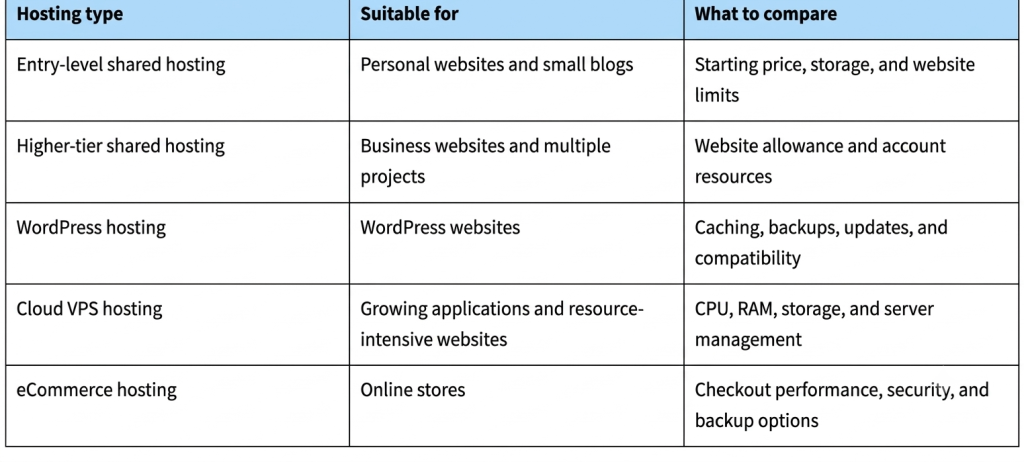
The main hosting options differ in how resources are allocated, how much control you receive, and what types of websites they support.
1) Shared Web Hosting
Shared hosting allows multiple websites to use resources on the same server. It is generally suitable for personal blogs, portfolio websites, small business websites, and new projects.
It can be a practical starting point if you want to host a website without managing a complete server.
2) WordPress Hosting
WordPress hosting is intended for sites that run on WordPress. Depending on the provider it may include WordPress installation , caching, automatic updates, backups or platform specific support.
If you use WordPress, compare WordPress hosting options based on caching, backups, software compatibility, and the level of maintenance included.
3) Cloud VPS Hosting
If your application needs root access, custom server software, or greater server-level control, consider cloud VPS hosting. Compare CPU, RAM, storage, backup options, management requirements, and pricing across providers before choosing a plan.
4) eCommerce Hosting
eCommerce hosting supports online stores developed with WooCommerce and the like. Resources needed depend on the product catalogue, plugins, database activity, checkout flows and visitor traffic.
When choosing a hosting company for your online store, you need to take into account security, backups, database performance and your ability to handle traffic peaks.
Note: cPanel hosting and LiteSpeed hosting are generally names of the control panel or server technology, not a different hosting architecture. For example a cPanel plan can also be a shared hosting plan.
Web Hosting Plans in India: What Do They Cost?
Web hosting prices depend on the provider, subscription duration, promotional discounts, included resources, and web hosting renewal price after the initial subscription period.
How Much Does Web Hosting Cost in India?
The advertised monthly price may be available only when you purchase an annual or multi-year subscription. Monthly billing may cost more per month, and renewal prices may differ from introductory prices.
Before purchasing, check:
- Initial hosting cost: The amount payable for the first subscription period.
- Renewal cost: The price charged when the initial term ends.
- Domain cost: Whether domain registration is included and what renewal costs.
- Additional services: Charges for paid backups, migrations, security tools, or other add-ons.
- Upgrade cost: The price of moving to a larger plan as your website grows.
Always review the billing duration, final checkout amount, and applicable taxes before placing an order.
Compare Web Hosting Providers in India
When comparing web hosting providers, evaluate plans with similar resources and subscription terms. A lower advertised price does not necessarily mean a lower long-term cost.
For a broader overview of hosting companies, their services, and the factors to consider when comparing them, read our guide: Top 10 Web Hosting Companies in India.
Use that guide to explore providers, then compare their actual plans based on your budget, website requirements, resources, and renewal costs.
To compare hosting providers, review their official plan pages and check the included resources, introductory and renewal prices, security features, support terms, and upgrade options. Use the same criteria for each provider to make a fair comparison.
For another reference point, review the Cyberin web hosting comparison to examine the available plans and features. Compare the listed information with other providers’ published specifications and pricing before making a decision.
Cyberin Web Hosting Plans and Prices
Cyberin offers four web hosting plans: Nano, Basic, Plus, and Pro, with options for different website requirements. Whether you are starting a personal blog, running a small business website, or managing multiple websites, you can compare these plans to find an option that fits your needs and budget.
If you are comparing affordable web hosting in India, explore the Cyberin web hosting plans to review available features, website allowances, and pricing. Choose a plan based on your current requirements, and consider the upgrade options you may need as your website grows.
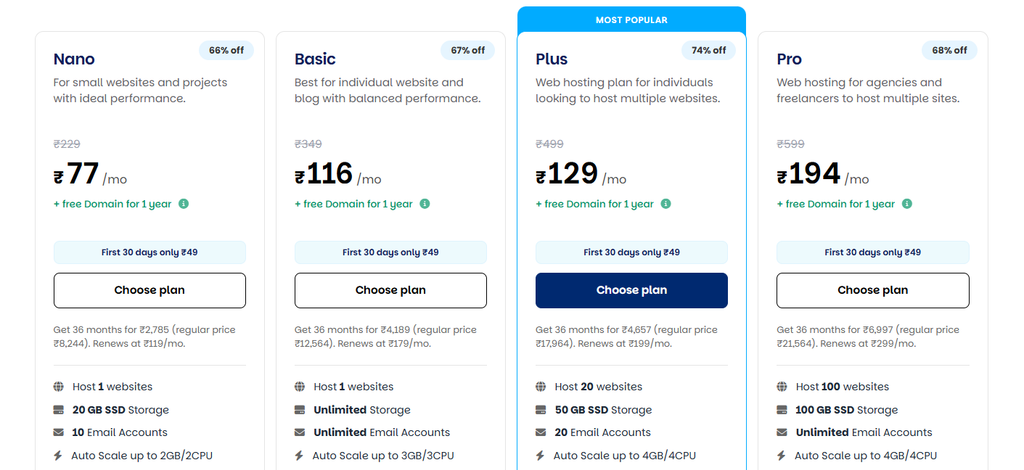
1) Nano Plan — ₹77/month
Designed for small websites and projects, Nano can be a starting point for a personal website, portfolio, or small online project.
2) Basic Plan — ₹116/month
Basic is intended for individual websites and blogs. The supplied offer also includes a free domain for one year, subject to the applicable terms.
3) Plus Plan — ₹129/month
Plus is designed for individuals who want to host multiple websites under one hosting account. Check its website allowance and resource limits before purchasing.
4) Pro Plan — ₹194/month
Pro is intended for agencies and freelancers managing multiple websites. The supplied offer also includes a free domain for one year, subject to the applicable terms.
These plans should be compared using their actual website allowances, storage, email limits, and other included resources, not price alone.
When Should You Consider Cloud VPS Hosting?
If your application needs root access, custom server software, or greater server-level control, consider Cyberin Cloud VPS Hosting. Compare CPU, RAM, storage, backups, and server management requirements before choosing a VPS.
How to Choose a Web Hosting Plan
Choose a plan based on your website type, number of websites, resource requirements, budget, and expected growth. Compare renewal prices and included features before purchasing.
For a detailed step-by-step guide, read How to Choose a Web Hosting Plan for Your Website.
What Should You Check Before Buying Web Hosting?
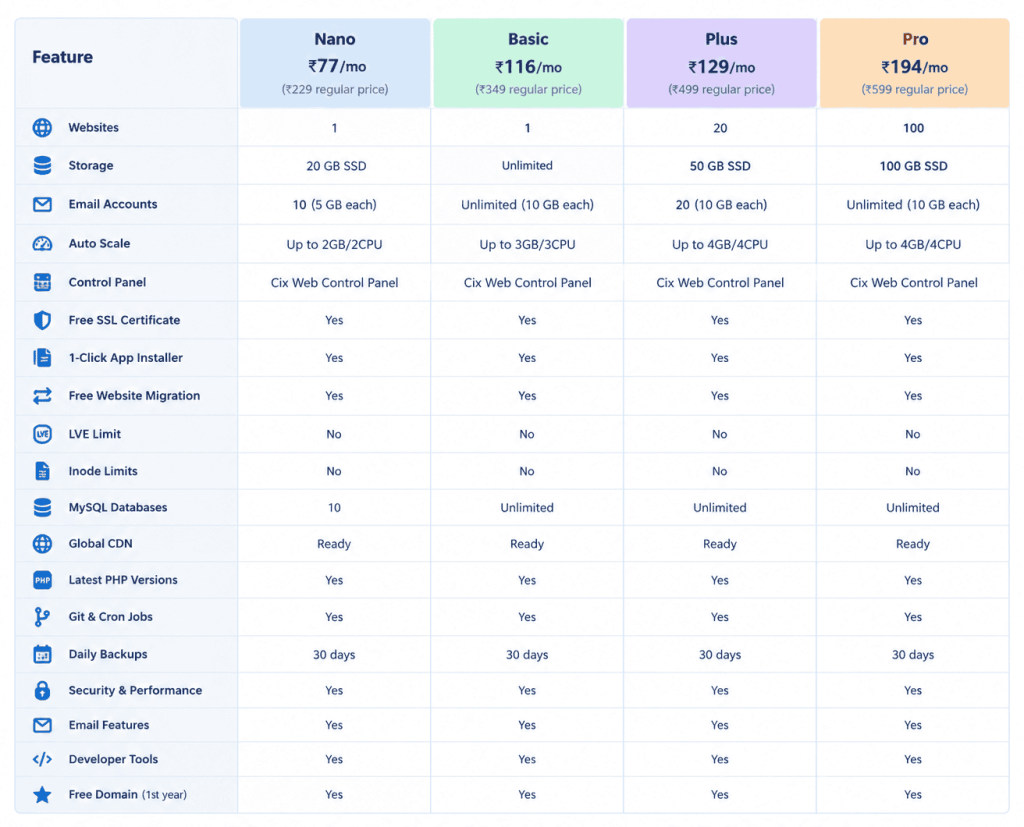
Before purchasing a plan, compare the features that affect your website’s performance, security, and long-term cost.
Storage and File Limits
Storage determines how much space is available for website files, images, databases, and other content. Media-heavy websites may need more storage than simple blogs.
Also check inode limits, which restrict the number of files and directories an account can contain.
CPU, RAM, and Processing Resources
CPU and RAM affect how much work a website can process at a given time. These resources matter for dynamic websites, database-intensive applications, and online stores.
For shared hosting, check the published resource limits and usage policies. For VPS hosting, compare CPU, RAM, and storage specifications.
Storage Technology and Server Software
SSD and NVMe storage can improve file access and database operations. Server software and caching can also influence how quickly website pages are delivered.
However, storage technology alone does not determine website speed. Application code, database queries, caching, network latency, and third-party scripts also contribute.
Bandwidth and Traffic Limits
Check whether a plan specifies a bandwidth limit or advertises unmetered bandwidth under a fair-use policy.
Unmetered bandwidth does not mean unlimited CPU, RAM, simultaneous requests, or application processing capacity. Websites with traffic spikes may still need more resources.
SSL, Backups, and Security
Check whether SSL certificates are included and renewed automatically. Review backup frequency, retention periods, restoration options, and whether you can keep independent copies.
Also consider malware protection, account security, software updates, and recovery procedures.
Customer Support and Migration
Check the provider’s support channels, hours of operation and coverage for your hosting type. If you already have a website, see if they offer any help with migration and if there are any extra charges.
Renewal Prices and Cancellation Terms
Some promotional prices may require a minimum initial subscription period. Please check the standard renewal price, minimum billing term, eligibility for refunds and cancellation process.
A lower introductory rate plan may be more expensive over the entire time you plan to use it.
Uptime Terms
Check any published service level agreement or uptime commitment. See how uptime is measured, what interruptions are excluded, and if compensation is paid if the promise isn’t kept.
An uptime guarantee is subject to the terms it states, and doesn’t mean that interruptions won’t happen.
Which Hosting Type Is Suitable for Your Website?
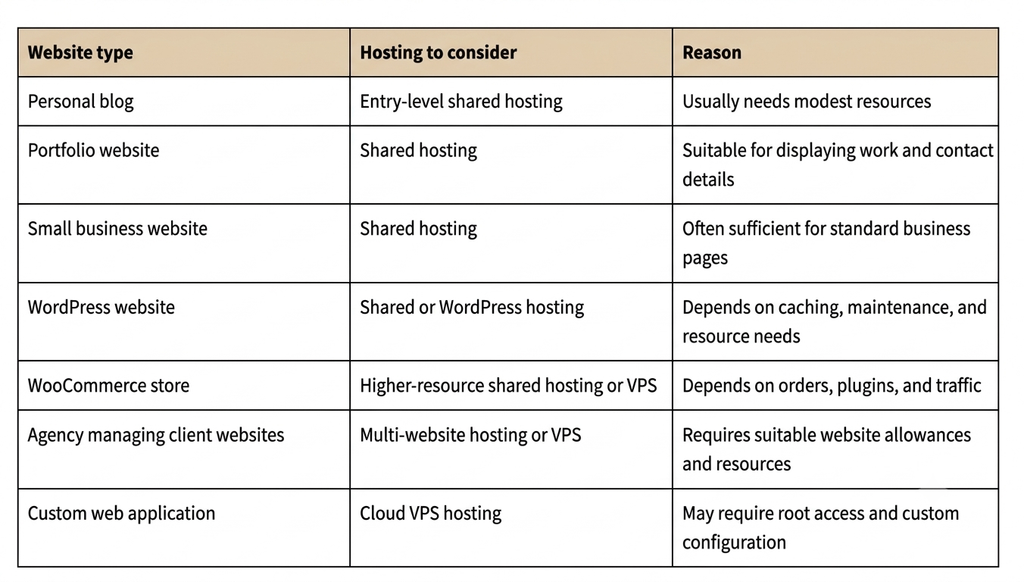
These are not rules cast in iron; these are starting points. A well-optimized website can run comfortably on shared hosting, but a poorly optimized website can struggle even with more resources.
How Much Traffic Can a Hosting Plan Handle?
There is no general limit of visitors for each type of hosting. How much depends on what you cache, what you are doing with the database, how complex your pages are, how many concurrent visitors you have, and what resources the account has available.
When calculating your needs, consider daily traffic peaks, dynamic pages, database queries, plugins, and whether visitors are logging in or making purchases.
These visitor estimates are guides for planning and are not guarantees. Watch resource usage and upgrade as sustained demand approaches your plan limits.
Common Mistakes to Avoid When Choosing Hosting
- Picking only on price: A cheap plan could have limitations that are not suitable for your website.
- Do not look at renewal rates. Look at the price after the intro period.
- Assuming unlimited means unrestricted: Review resource limits and fair-use policies.
- Buying a VPS without considering management: Root access can require server administration knowledge.
- Skipping backups: Consider retention and restoration options.
- Future Growth Ignored: Seek ease of upgrade.
- Assuming server location guarantees speed: Caching, network routing, and application optimization also affect performance.
Web Hosting Buying Checklist
Before placing an order, confirm that:
- The plan supports your website platform.
- Storage and website allowances are sufficient.
- Resource limits are documented.
- SSL and backup features meet your requirements.
- Customer support covers the issues you may encounter.
- Introductory, renewal, and domain prices are clear.
- The provider offers a suitable upgrade path.
- Refund and cancellation terms are understandable.
Use the same checklist when comparing providers so that you can evaluate plans consistently.
Conclusion
The best web hosting in India depends on the type of website you have, the resources you need, your budget and your expected growth. Shared hosting is perfect for blogs and small business sites. WordPress hosting, eCommerce hosting, and cloud VPS hosting all solve different technical needs.
When picking a provider, look at introductory and renewal rates, storage, processing resources, security, customer support and upgrade options.
If you are thinking about hosting your website, then check out Cyberin web hosting plans and other providers to compare features, pricing, and resources included. Choose a full subscription plan that meets your current needs and budget.
Frequently Asked Questions
Which is the best web hosting in India for beginners?
Shared hosting is a practical first step for beginners who have a personal blog, portfolio, or small business website. Choose a plan. Consider the ease of use, SSL, backups, support, and renewal prices.
How much does web hosting cost in India?
The cost depends on the provider, hosting type, subscription duration, and included resources. Promotional prices can be lower than renewal rates, so compare the total cost before purchasing.
Which Cyberin plan is suitable for a single website?
Nano is designed for small websites and projects, while Basic is positioned for individual websites and blogs. Compare their current features and resource limits to determine which meets your requirements.
Is shared hosting enough for a business website?
Shared hosting is often sufficient for a small business website with moderate traffic. A website that requires custom server software, root access, or greater resource control may benefit from VPS hosting.
Can I upgrade my hosting plan as my website grows?
Upgrade options depend on the provider and hosting service. Check whether upgrading requires migration, causes downtime, or involves additional charges.
